
In this Article:
Try Kanbanchi now
Start your free trial


It’s official, the productivity paradox is real: we have more tools than ever, yet we seem to have less time to get work done effectively (or even at all…). As frustrating as this sounds, we need to be real and examine why. If you feel like your workday is spent managing the management:
You aren’t alone. Most professionals today are suffering from tool fatigue. We were promised that software would set us free, but instead, it often feels like we’ve just traded paper to-do lists for digital ones that are twice as noisy.
So, what is the best task management software?
The honest answer: It isn’t necessarily the one with the most features or the flashiest AI assistant. The best software is the one that actually gets out of your way. It’s the tool that bridges the gap between
Without forcing you to leave your comfort zone. So, what’s the best approach to take? We’re here to help.
In this guide, we’re cutting through the marketing hype of 2026. We’ve tested the heavy hitters, the newcomers, and the niche players to help you find the one system that fits your team like a glove, especially if you’re one of the millions who already live and breathe in Google Workspace.
In the early days of digital work, a simple checklist was enough. But as our workflows have become more asynchronous and distributed, the humble to-do list has hit a brick wall, and prioritizing tasks has become more prescient.
A personal checklist tells you what you need to do, but it doesn’t explain why, when, or how it connects to the bigger picture. This is the fundamental difference between a basic app and a true task management system for SME teams.
In 2026, task management isn’t just about marking things as Done. It’s about these three things:
Having the relevant Google Doc or Figma file attached to the task so you don’t have to search.
Using Kanban boards or Gantt charts to see where work is piling up before a deadline is missed.
Relying on a fragmented Frankensuite of separate apps for chat, files, and tasks is a recipe for burnout.
When your task management software lives in a vacuum, your team spends more time coordinating work than actually doing it.
The goal this year is unified productivity: a single source of truth where
All without you breaking a sweat.
Which is the best software solution? We’ll take a look at some of the runners and riders now.
Finding the best tool isn’t about finding the one with the most buttons; it’s about finding the one that matches your team’s internal rhythm.
In 2026, the market is split between all-in-one productivity hubs and specialized tools that do one thing exceptionally well.
Here is our curated list of the top 10 task management software solutions currently leading the pack.
| Software | Best For | Key Features | Pricing (Starts at) |
|---|---|---|---|
| Kanbanchi | Google Workspace Teams | Native Drive/Calendar integration | $5.99/user/mo |
| Monday.com | Visual Workflows | Highly customizable dashboards | $9.00/user/mo |
| ClickUp | Feature Seekers | Everything app (Docs, Chat, Goals) | $7.00/user/mo |
| Asana | Team Collaboration | Clean UX and workflow automation | $10.99/user/mo |
| Todoist | Personal/Light Team Use | Natural language task entry | $4.00/user/mo |
| Trello | Simple Kanban | Intuitive drag-and-drop boards | $5.00/user/mo |
| Notion | Knowledge Management | Wiki-style docs + databases | $8.00/user/mo |
| Jira | Software Developers | Agile/Sprint-centric tracking | $8.15/user/mo |
| Wrike | Enterprises | Advanced reporting & governance | $9.80/user/mo |
| Motion | AI Scheduling | Auto-adjusting daily calendars | $19.00/user/mo |
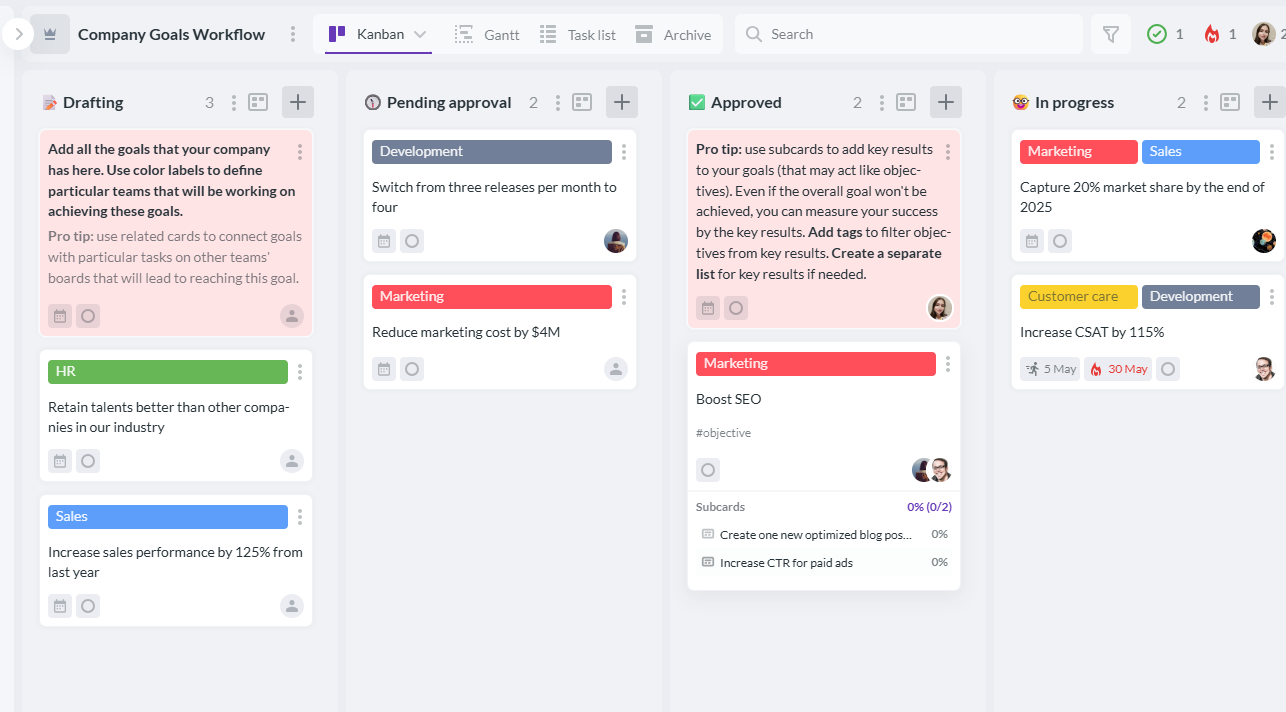
Kanbanchi provides one of the best task management workspaces for organized projects
If your team lives in Google Docs, Sheets, and Gmail, Kanbanchi is the most logical choice.
Unlike other tools that require you to bridge a gap between your files and your tasks, Kanbanchi lives inside your Google ecosystem.
It turns your Google Drive into a professional project management engine.
On top of that foundational Drive integration, Kanbanchi adds powerful task management features like intuitive Kanban boards for visual workflow tracking, customizable task cards with assignees, due dates, tags, and attachments, built-in Gantt charts to map timelines and dependencies, and time tracking for measuring progress.
Start a free Kanbanchi trial now
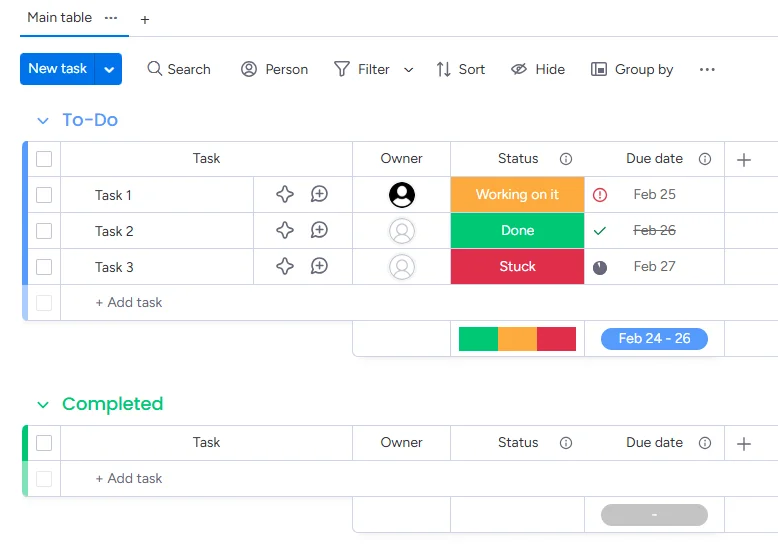
View of Monday.com illustrating task organization
Monday.com is the Work OS for teams that think in color.
Its strength lies in its ability to turn complex data into visual boards that anyone can understand in seconds.
It’s excellent for marketing and creative teams who need to see high-level timelines at a glance. However, it can feel a bit bloated and feature heavy.
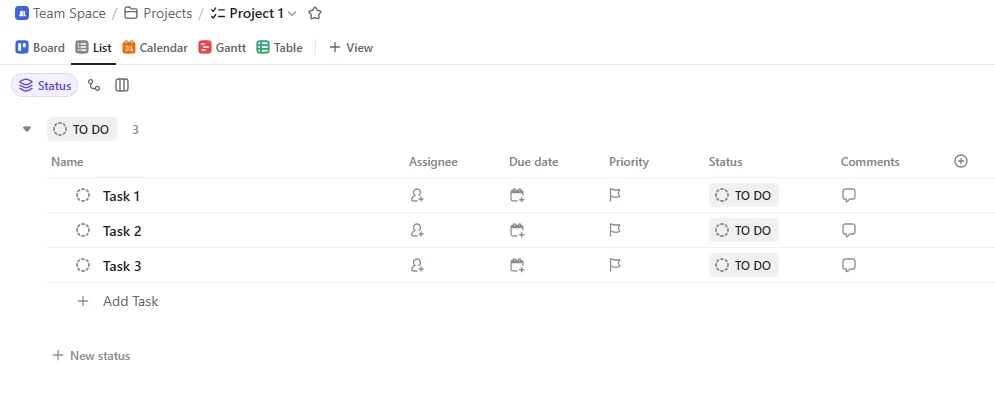
The ClickUp interface provides a clear and organized view of your tasks
ClickUp’s mission is to replace all your other apps.
It offers an almost overwhelming amount of features: Docs, Whiteboards, Goals, and even Chat.
However, be warned: with great power comes a steep learning curve. It is best for teams that have a dedicated Tool Admin to set things up.
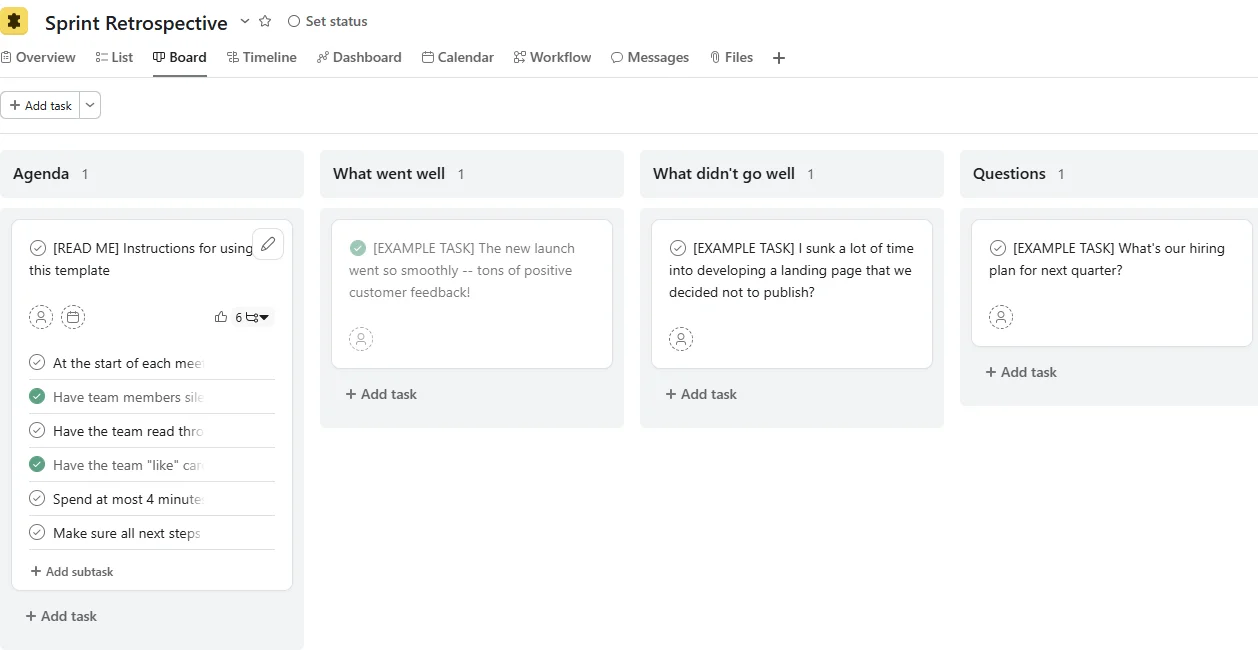
Interface of Asana task management software for team projects
Asana remains the gold standard for operational clarity.
It’s built to help teams hand off work seamlessly without items falling through the cracks. If your primary goal is reducing work about work, Asana’s automations and clean interface are hard to beat.
It has a decent array of features, but requires a lot of getting used to.
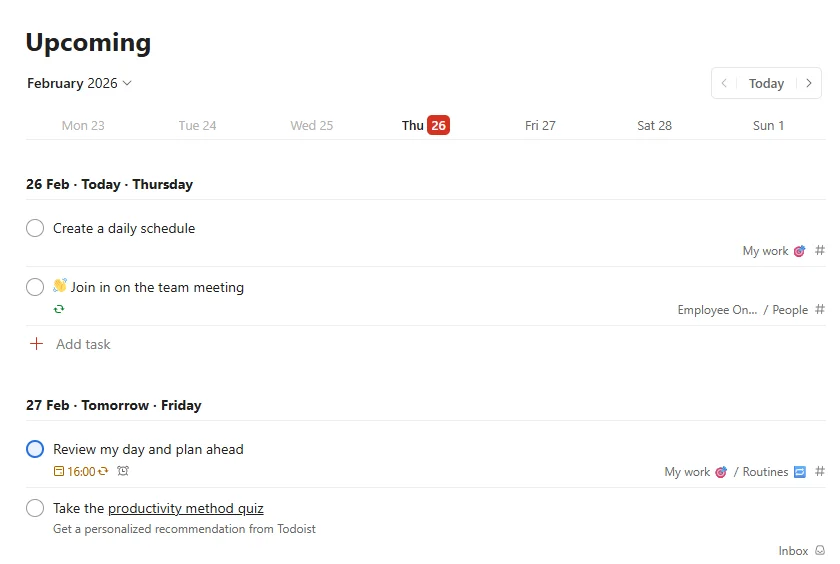
Interface of Todoist task management software for organizing tasks
For individuals or small teams that just need to get things done without the bloat, Todoist is unrivaled.
Its natural language processing, typing ‘Meeting at 4 pm every Friday’, is the fastest way to get tasks out of your head and into a system.
It might not be heavy-hitting enough for larger teams, so it’ll work better for smaller groups or solopreneurs.
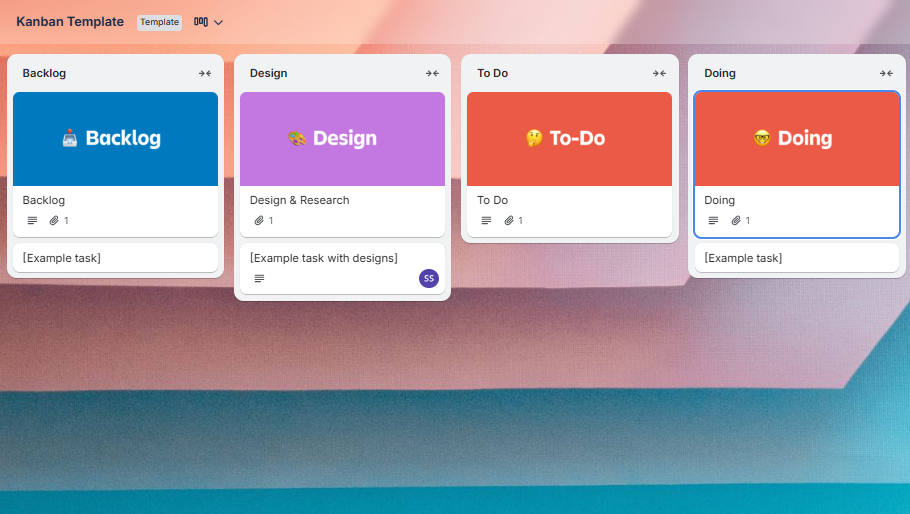
Trello task management software workspace for team projects
Trello is the digital equivalent of a whiteboard with sticky notes.
It’s perfect for simple workflows and visual-first teams.
While it lacks some of the deep reporting of Wrike or Jira, its ease of use means your team will actually use it.
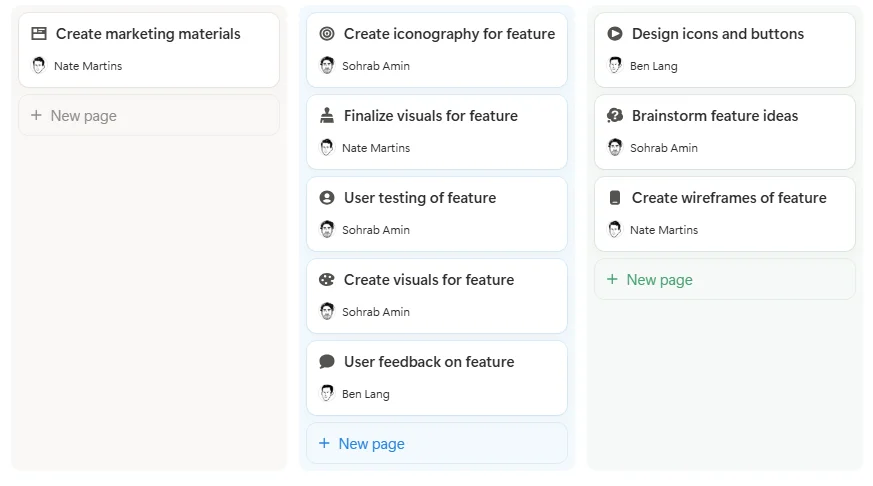
A versatile Notion workspace that turns task management into a seamless experience
Notion is unique because it treats tasks as part of a larger knowledge base.
It’s ideal for teams that need to store deep documentation, meeting notes, and project specs right alongside their task lists.
However, it has a steeper learning curve than some tools.
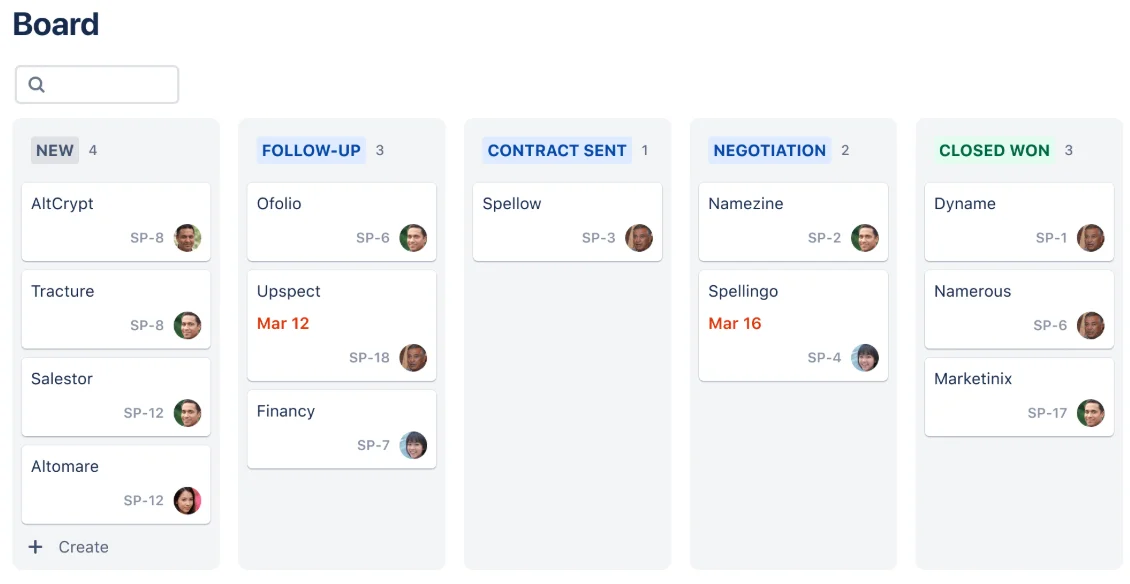
A Jira workspace that streamlines task management for teams and projects
If you are managing a software sprint, Jira is the industry standard.
It handles backlogs, epics, and bug tracking better than anyone else.
Users say it can feel overly rigid for non-technical departments like HR or Sales.
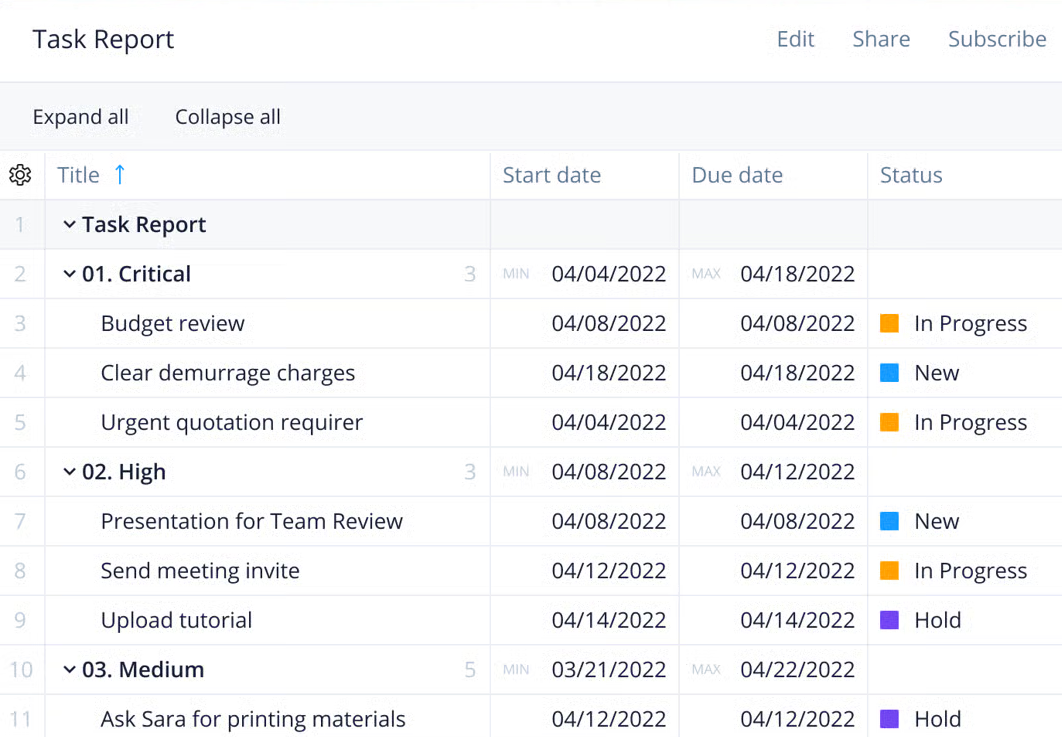
Wrike transforms task management into a visual and organized workspace
Wrike is built for the Big Leagues.
It offers robust security, complex dependency tracking, and cross-departmental reporting that global organizations require.
It can be a bit too technical and feels heavier to learn.
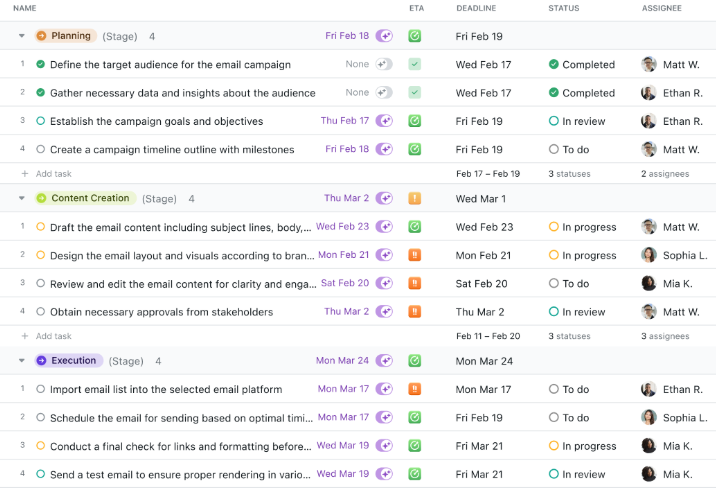
Motion AI offers a dynamic workspace that simplifies task management
Motion is the newcomer that’s changing the game.
Instead of you manually moving tasks, Motion’s AI analyzes your calendar and automatically schedules them into your open time slots. It’s the closest thing to having a personal digital assistant.
It may be one to avoid if you don’t want to rely too heavily on AI for your workflow.
Let’s now take some time to look at why you need to integrate your systems.
In 2026, the real productivity killer isn’t a lack of effort; it’s far too much context switching.
Every time you leave your task board to
…your brain pays a 40% productivity tax. That’s the switching cost when you move between separate platforms.
This is why looking for the best task management software that integrates natively with Google Workspace is no longer just a luxury, it’s a competitive necessity.
Many top-rated tools claim to integrate with Google, but they are actually just bolt-on solutions. Here’s why:
You often have to manually upload a file to the tool, creating a duplicate that isn’t updated when the original Google Doc changes.
You have to manage separate passwords, user permissions, and security settings for the external tool.
You still end up with 20 browser tabs open, trying to bridge the gap between your communication and your work.
A truly native integration, like the one found in Kanbanchi, removes these friction points entirely. Instead of a bridge between two worlds, it creates one unified workspace.
Imagine receiving a client task in Gmail. In a non-integrated setup, you’d copy the content, open your task manager, create a card, and paste the data.
In a native ecosystem:
By choosing a tool that lives where you already work, you stop managing software and start delivering results.
With so many best-rated options on the market, the selection process can feel like a project in itself.
The secret? Don’t start with the software’s feature list; start with your team’s actual workday.
A tool that works for a five hundred person engineering firm will likely suffocate a five person creative agency.
Here is how to navigate the choice without the headache.
Before looking at new tools, measure your current friction. How many times a day does your team ask, “Where is that file?” or “What is the status of this?”
If you are already using Google Workspace, your priority should be a tool that reduces this overhead. Look for native integration rather than a simple connector, which still requires separate logins and file re-uploads.
The best task management software in 2026 offers multiple views and insights for the same data.
Managers usually need high-level Gantt charts or Timelines to spot bottlenecks.
Individual Contributors often prefer a simpleTask list or Kanban board to focus on today’s must-dos.
Ensure the tool you choose allows every team member to toggle into the view that makes them most productive.
If a tool requires a week-long training seminar, it’s probably too complex for your team. Use a free trial to run a Three-Day Test:
Be wary of per-user pricing that looks cheap but hides essential features behind enterprise-tier paywalls.
By focusing on usability and ecosystem fit over raw feature counts, you’ll find a tool that your team actually enjoys using, which is the only way to ensure a long-term return on your investment.
Start a free Kanbanchi trial now
We’ll close out our guide with a few of the most commonly asked questions on task management and buying the right team software. Feel free to get in touch with us if there’s anything you’d like to discuss further.
Think of a task as a single brick and a project as the entire house.
Task management is about the daily execution, who is doing what, and when.
Project management is the broader orchestration that involves budgets, long-term resource planning, and complex dependencies.
If you’re a small to mid-sized team, a robust task manager is often more agile and easier to adopt than a heavy project management suite.
Yes. Many leaders like Trello, Asana, and ClickUp offer Free Forever plans. However, these usually come with invisible walls, like limits on the number of collaborators, file attachment sizes, or the number of automations you can run.
For Google Workspace users, Kanbanchi offers a highly competitive entry point that scales with your team’s Drive usage.
If you are managing your own day (grocery lists, personal errands), a to-do list like Google Tasks is perfect.
But the moment you need to assign a task to someone else, track a deadline, or attach a working file, you need a task manager.
Collaboration requires accountability, and a simple list can’t provide that.
Because that’s where your work already lives. If your task manager doesn’t talk to your Gmail or Drive, you’re forced to act as a human bridge between apps, copying links, downloading files, and wasting time.
Integration turns your browser from a collection of tabs into a unified command center.
Read next: Quick Checklist to Get Organised at Work (or in a Home Office) in 2020
More articles on Task management here
In this Article:
Start using Kanbanchi now
Start your free trial